
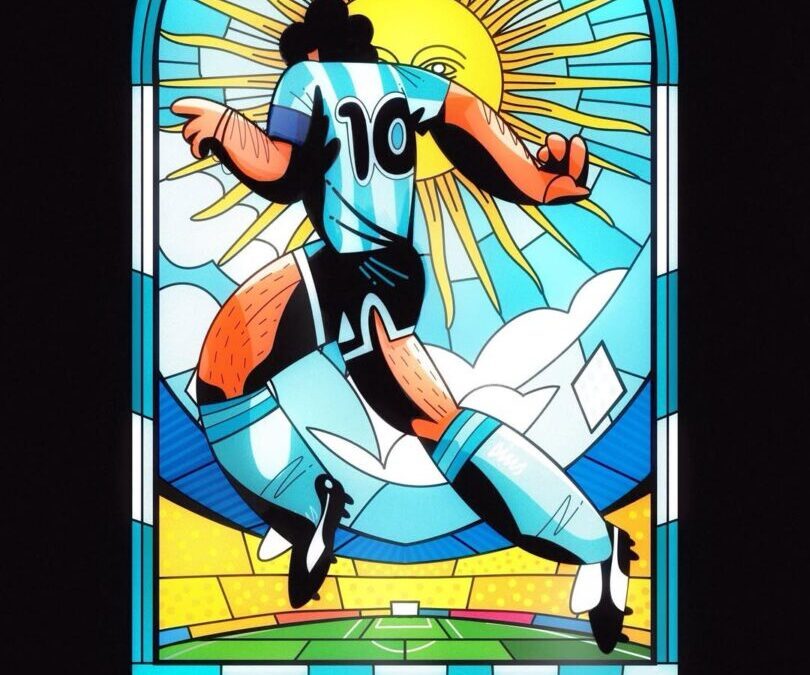
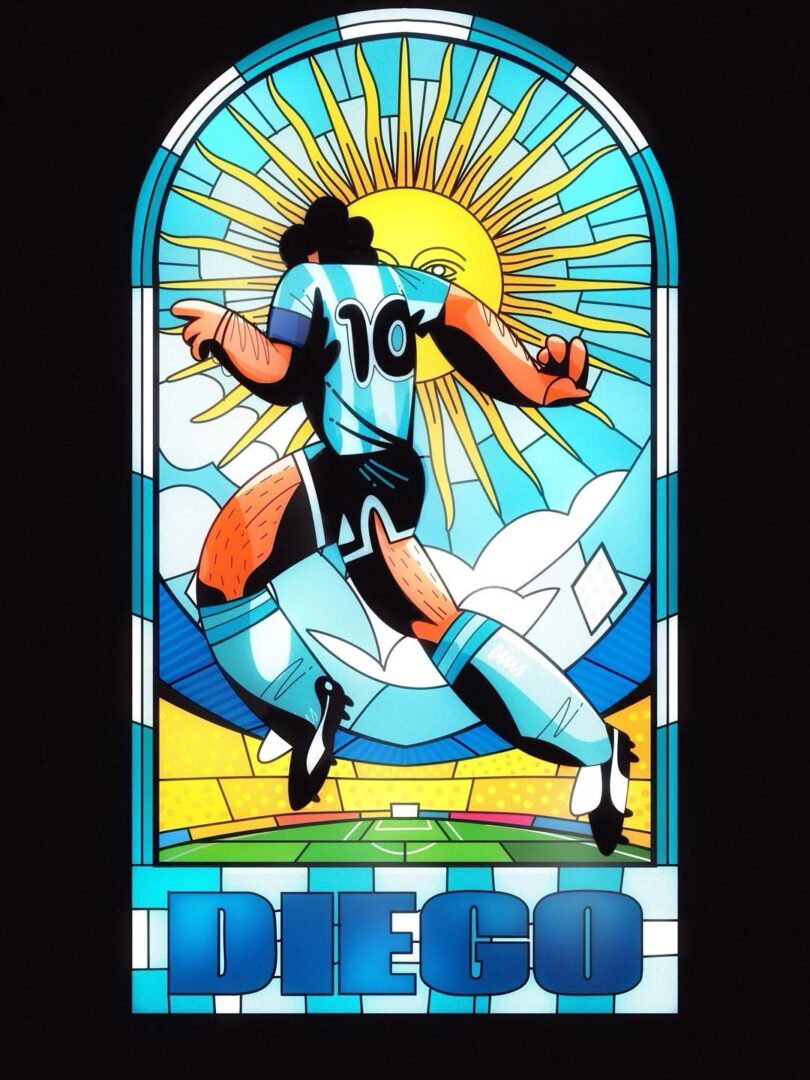
Manche Interviews fühlen sich weniger nach Frage-und-Antwort an als nach einem langen Gespräch an der Bar, irgendwo zwischen Anstoß und letzter Runde. Dieses hier ist so eines. Wir sprechen mit James, besser bekannt als Mister Dills – Illustrator, Fußballromantiker und jemand, der das Spiel nicht nur schaut, sondern fühlt. Einer, der aus dem Norden kommt, den Süden in sich trägt und dessen Blick auf Fußball ebenso von Ästhetik wie von Emotion geprägt ist.
Es geht um Italia ’90 und White Hart Lane, um Pelé und Cruyff, um Fankultur, Zweifel, Linien auf Papier und die flüchtigen Sekunden, in denen ein Stadion den Atem anhält. Vor allem aber geht es um die Frage, warum Fußball – trotz allem – noch immer Magie besitzt.
Macht es euch bequem. Das Gespräch beginnt dort, wo gute Geschichten meistens anfangen: mit einer Vorstellung, als würde man sich gerade erst kennenlernen.
Das Interview ist in deutscher und englischer Sprache veröffentlicht.
Please scroll down for the English version.
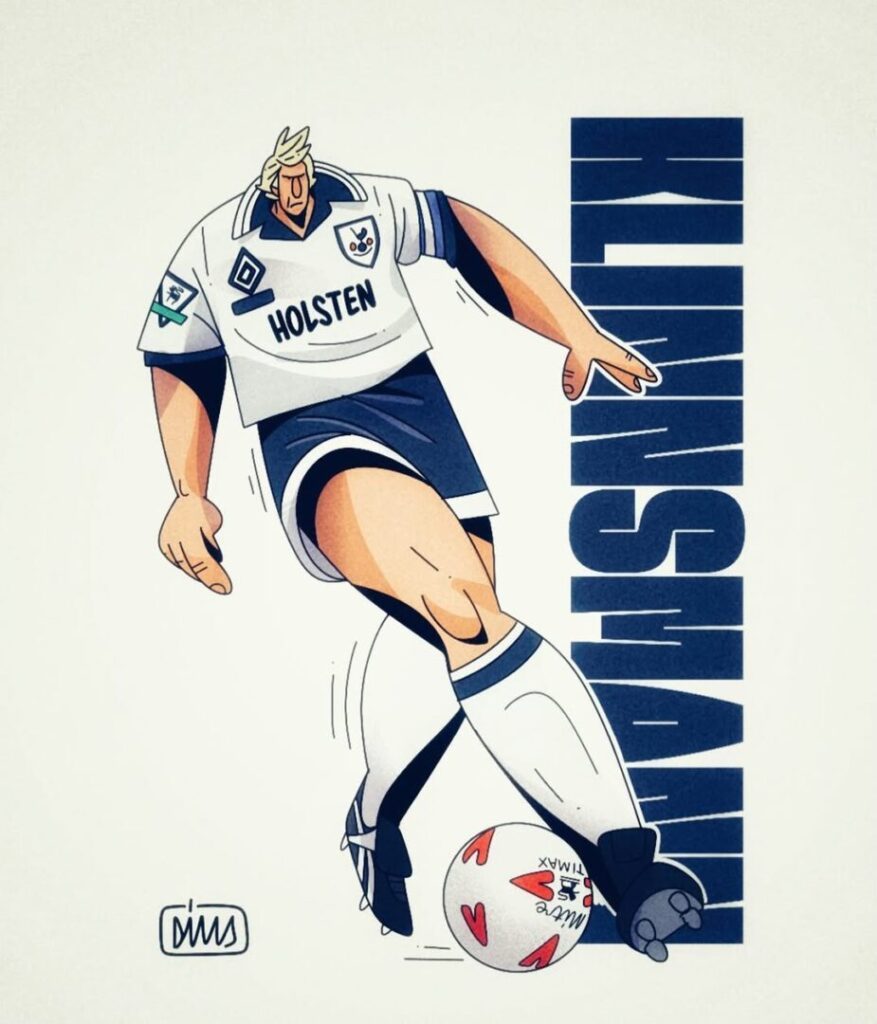
Hallo James, schön, dass du da bist. Für alle Leserinnen und Leser, die gerade im Zug sitzen, im Pub stehen oder auf dem Weg zur Arbeit sind: Stell dich doch bitte kurz vor – so, wie du es einem Fremden an der Bar erzählen würdest.
Ah, okay. Also: Ich bin James, Illustrator, lebe im Norden, komme aber ursprünglich aus dem Süden. Mein Hintergrund liegt in UX und Design, aber in letzter Zeit zieht es mich immer stärker zur Illustration. Und ich habe eine ziemlich ausgeprägte Obsession für das schöne Spiel.
Kannst du dich noch an den exakten Moment erinnern, in dem dich der Fußball gepackt hat? Diese eine Sekunde ohne Rückfahrkarte?
Das ist lange her, so viel kann ich sagen. Ich glaube, es war die WM 1990 in Italien. Ich habe zwar selbst ein bisschen gespielt, aber nicht besonders viel. Italia ’90 hat die Fantasie eines ganzen Landes entfacht. In der Schule haben wir ständig „World Cup Doubles“ gespielt – ein K.-o.-Spiel – und mehr Zeit damit verbracht zu diskutieren, wer jetzt Schillaci, Gazza oder Gullit sein darf, als tatsächlich Fußball zu spielen.
Das Halbfinal-Aus gegen Deutschland hat mir dann endgültig den Rest gegeben. Wir waren Teil von etwas Größerem. Und genau das ist für mich die Schönheit des Spiels: für eine Mannschaft zu spielen oder sie zu unterstützen. Geteilte Träume, geteilte Hoffnungen.
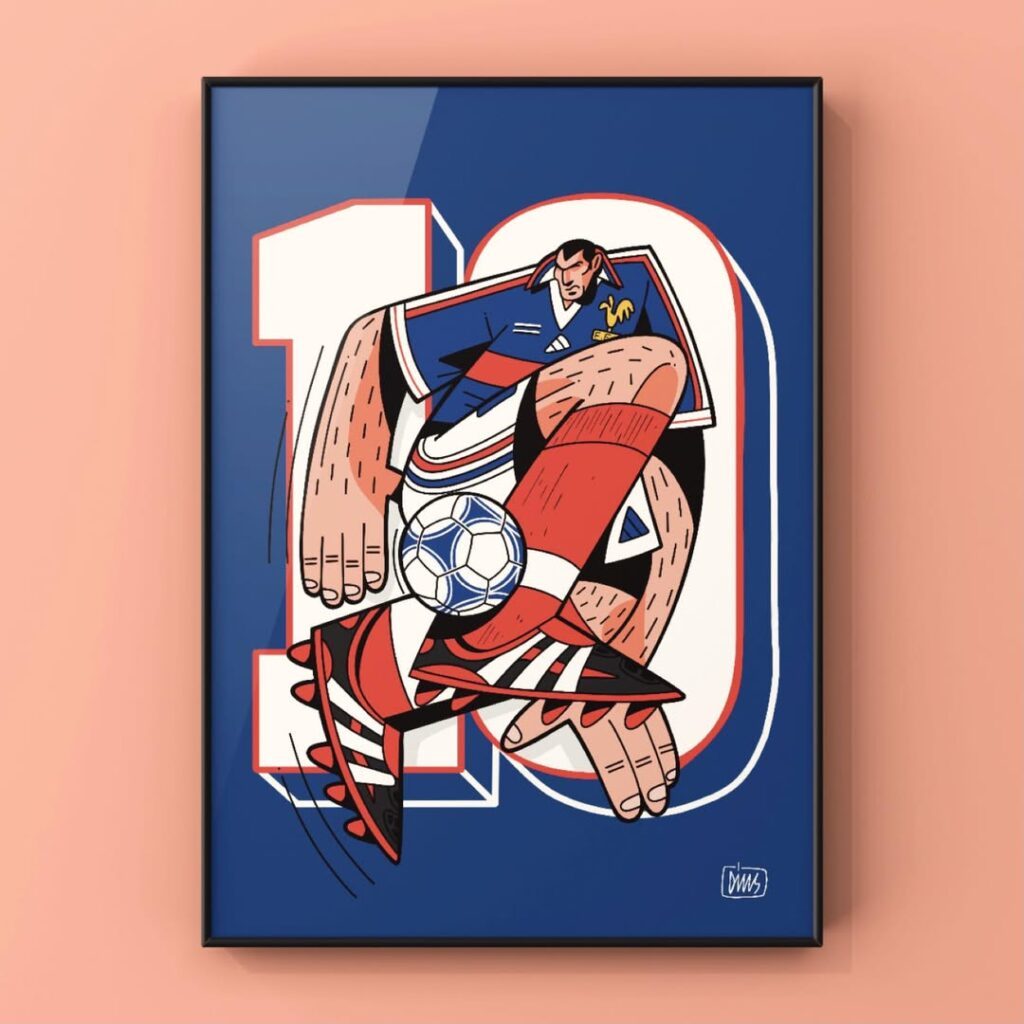
Fußball ist heute ein hochoptimiertes Monster – VAR, absurde Ablösen, eine Klub-WM, die sich kein Fan ewünscht hat. Was hält für dich trotzdem die Magie am Leben?
Es sind die Momente. Der Fußball hat sich extrem verändert, und vieles an dieser Entwicklung gefällt mir nicht. Aber es gibt immer noch Mannschaften, die unfassbar schönen Fußball spielen – Bayern, PSG, Barça. Und es gibt immer noch Spieler, die diese magischen Sekunden erzeugen, in denen ein Stadion explodiert.
Und wenn dann Länder wie Schottland oder Irland zuletzt solche Ergebnisse feiern, erinnert mich das wieder daran, dass Fußball einfach der großartigste Sport der Welt ist.
Welches Stadion war das erste, das sich für dich wirklich wie Zuhause angefühlt hat? Wo die Luft anders schmeckt?
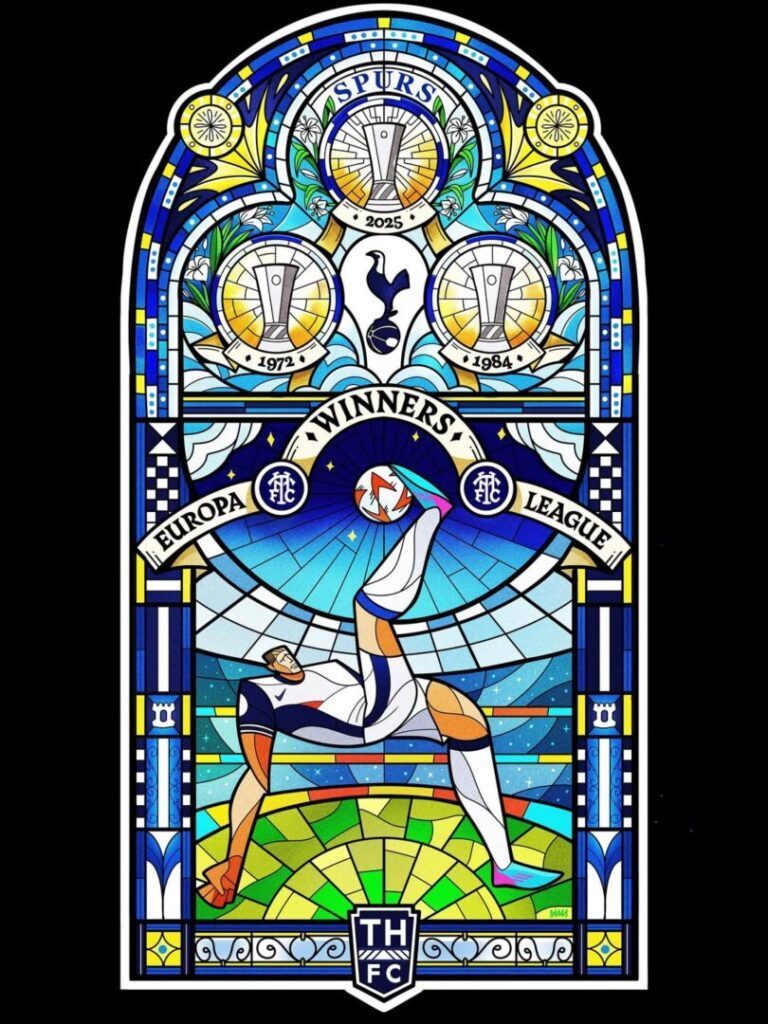
White Hart Lane. Das erste Stadion, das ich je besucht habe – und eines, das ich sehr vermisse. Der Marsch Richtung höhere Einnahmen hat meinen Klub Tottenham dazu gezwungen, weiterzuziehen. Das neue Stadion ist beeindruckend, keine Frage. Aber es hat nicht die Magie der Lane. Und ich bin mir nicht sicher, ob es sie je haben wird.
Wenn du eine Zeitmaschine hättest: Zu welchem Spiel der Fußballgeschichte würdest du reisen – und warum?
Großartige Frage. Darf ich zwei nehmen?
Beide Male geht es um dieselben Teams: Brasilien gegen Italien, WM-Finale 1970. Und Brasilien gegen Italien bei der WM 1982 in Spanien. Zwei unglaubliche Spiele, mit überragenden Fußballern auf beiden Seiten.
Wenn ich mich entscheiden müsste, dann wohl 1970 – allein um Pelé einmal live zu sehen.
Gab es einen Spieler, der deinen ästhetischen Blick geprägt hat? Nicht nur technisch, sondern in Ausstrahlung, Stil, Körpersprache?
Ich weiß nicht, ob er meinen ästhetischen Blick geformt hat, aber ich habe Johan Cruyff immer geliebt – obwohl er weit vor meiner Zeit spielte. In den wenigen verfügbaren Aufnahmen sieht man einen Spieler voller Ideen und Eleganz, einen unglaublich geschmeidigen Athleten. Was für mich aber am meisten heraussticht, ist seine Präzision.
Wie sehr bestimmt dein Lieblingsverein deine Woche? Auf einer Skala von „Ist doch nur Sport“ bis „Sprich mich montags besser nicht an“.
Zu sehr. Viel zu sehr. Ich versuche wirklich, erwachsen zu werden und nicht zuzulassen, dass elf Millionäre, die nicht wissen, dass ich existiere, meine Stimmung für eine ganze Woche bestimmen. Aber es ist schwer. Tipps nehme ich gern an.
Wie würdest du deinen Stil beschreiben, ohne die Wörter „Illustration“, „Design“ oder „digital“ zu benutzen?
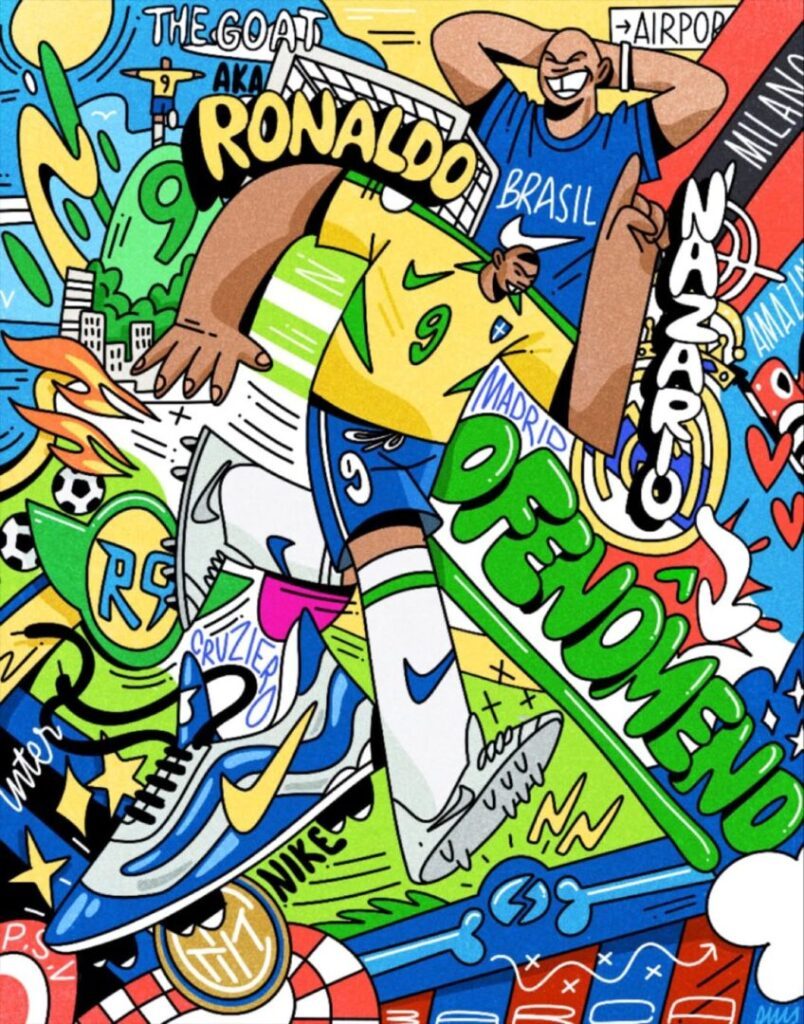
Verspielt. Ich arbeite auf sehr unterschiedliche Arten und habe keinen festen Prozess. Aber ich will Spaß haben, wenn ich arbeite. Ich probiere gern Dinge aus, experimentiere, ziehe Einflüsse aus allen Richtungen.
Gab es einen Moment, in dem du dachtest: „Okay, ich sehe Dinge, die andere nicht sehen“? Oder einen Mentor, der dich geprägt hat?
Ich bin mir nicht sicher, ob es diesen Moment je gab. Das Impostor-Syndrom ist immer da, besonders bei großen Kunden – aber ich glaube, das geht den meisten so. Ich versuche einfach, immer mein Bestes zu geben. Dafür habe ich vor allem meinem Vater zu danken.
Gibt es eine Linie, eine Form, eine Komposition, bei der du denkst: „Ja, das bin ich – unverkennbar“?
Nein. Weil sich alles ständig verändert. Manche Monate liebe ich klare Linien und flache Farben, dann wieder will ich mit Texturen und Symbolik arbeiten. Ich kann nur das machen, was mich gerade begeistert. Ich war nie jemand, der einen Stil perfektioniert und daraus eine „Marke“ macht. Wahrscheinlich wäre das karrieretechnisch schlauer – aber mein Kopf funktioniert einfach nicht so.
Was ist das größte Geheimnis – oder die größte Herausforderung –, die Energie eines Spiels in einem statischen Bild einzufangen?
Iterationen. Ich habe seitenweise Skizzen und Entwürfe, schnelle Bleistiftzeichnungen auf Kopierpapier oder im Skizzenbuch, die wahrscheinlich nie jemand sehen wird. Schnell arbeiten und nicht zu kostbar mit Ideen umgehen – das ist der einzige Weg, den ich kenne.
Manchmal dauert es eine Minute, manchmal einen Tag, manchmal länger. Aber Fußball ist ein Spiel der Geschwindigkeit. Und diese Geschwindigkeit versuche ich schon in der Ideenphase abzubilden.
Wo kommen dir die besten Ideen? Im Stadion? Im Bus durch York? Im Pub vor der zweiten Runde?
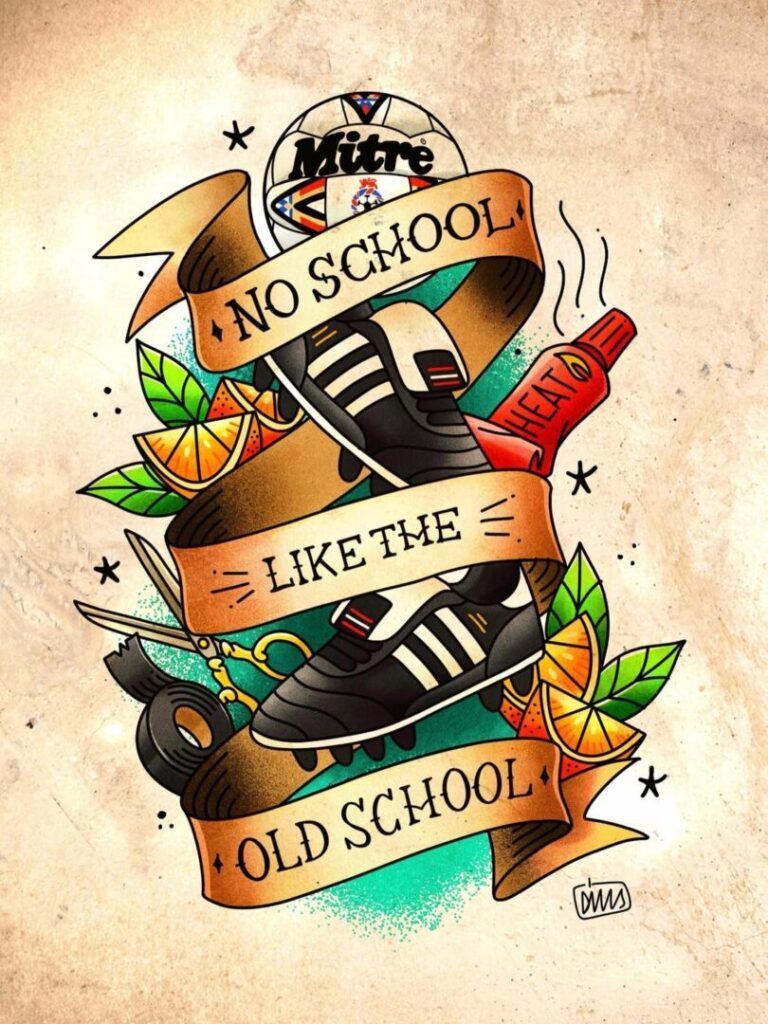
Meistens leider gegen zwei Uhr nachts. Morgens bin ich deutlich produktiver – aber nur, wenn die Idee schon steht. Dann heißt es: früh ins Bett, früh raus. In der Ideenphase ist es genau andersrum. Spät arbeiten, spät aufstehen. Das ist schon seit meiner Kindheit so.
Einen bestimmten Ort der Inspiration habe ich nicht. Ich würde mir wünschen, es gäbe ihn – mein Schlafrhythmus wäre deutlich gesünder.
Welche Designer oder Illustratoren stehen in deiner persönlichen „visuellen Startelf“?
Unmöglich – aber ich versuche es:
Charles Drawin, Dan Leydon, Mark Johnson, Danxdraws, Gabriel Diogo, tosma studio, Demi Illustration, Stan Chow, noscoredraws, bradyink, Camilo Ortiz Figueroa.
System: 4-4-2, Raute.
Und an Tagen, an denen gar nichts läuft: Was holt dich aus dem kreativen Loch? Ein Spaziergang, ein Last-Minute-Sieg, ein altes Stadionheft?
Ehrlich gesagt: nichts Konkretes. Ich bin extrem selbstkritisch. Bei jeder Arbeit sehe ich im Nachhinein nur, was ich hätte besser machen können. Aber irgendwann wird es ein Werk geben, das genau passt. Daran muss man glauben – das ist für mich der Kern des kreativen Prozesses. Perfektion werde ich wohl nie erreichen. Aber das nächste Projekt … wer weiß. Vielleicht ist es das. Und genau das hält das Feuer am Brennen.
Gibt es ein kleines, fast unsichtbares Detail im Fußball, das die meisten übersehen – das du aber liebst?
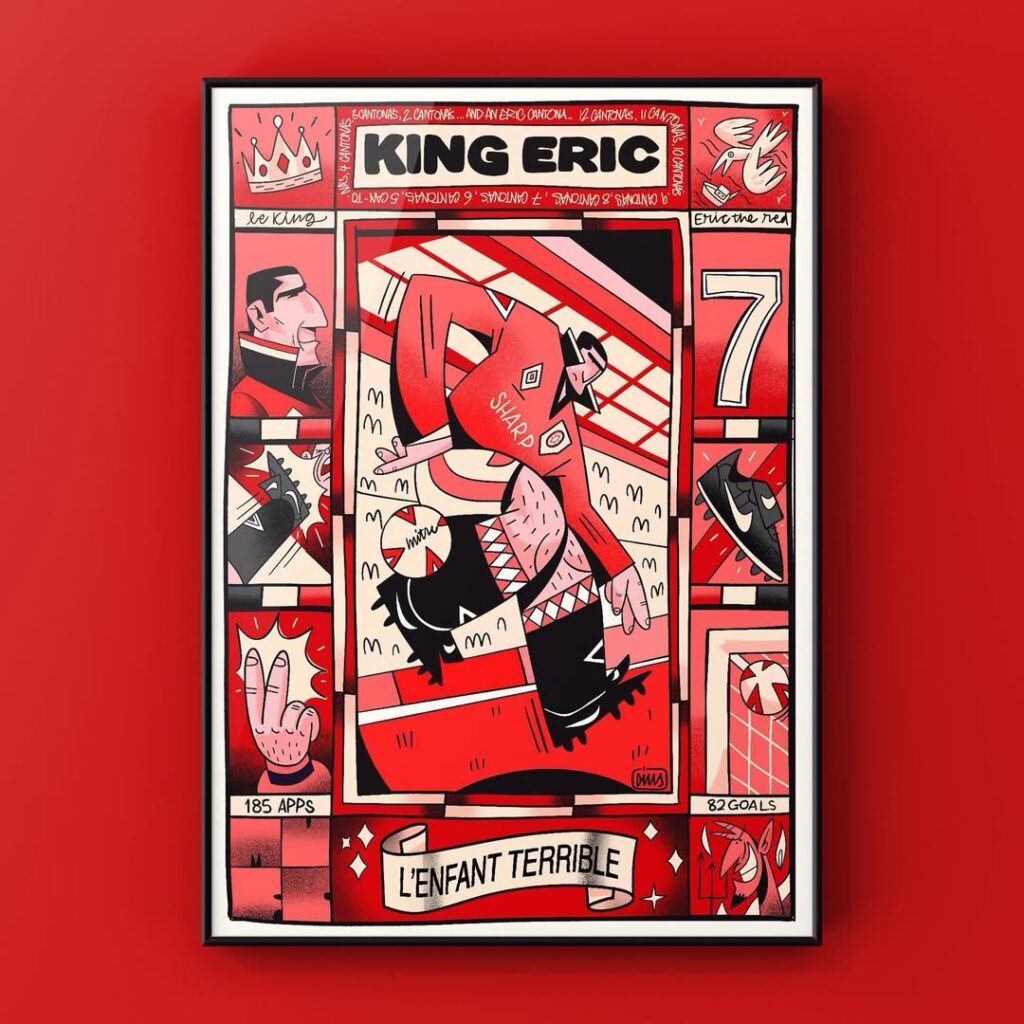
Mich fasziniert es, in Vereine einzutauchen, die man nicht in- und auswendig kennt. Als Fan kennt man die großen Linien der Topklubs. Aber das wahre Gold liegt tiefer. Mit Fans zu sprechen, für ein Projekt zu recherchieren – das liebe ich.
Die Lieder, die Rituale, die Erinnerungen, die Erlebnisse. Ich arbeite gerade an mehreren Projekten, die genau das aufgreifen: Fankultur, bei der ich fast zu einem Gefäß werde, durch das Fans ihre Erfahrungen ausdrücken können. Ziel ist es, Arbeiten zu schaffen, die ihre Leidenschaft symbolisieren. Das ist extrem spannend.
Stell dir vor, du dürftest die komplette visuelle Welt deines Lieblingsvereins gestalten – Trikots, Poster, Stadion, Merch. Wie sähe sie aus?
Das wäre ein Trip! In einer Welt, in der alles glatt, durchgebrandet und ziemlich homogen ist, würde ich radikal in die andere Richtung gehen. Ausgangspunkt wären die handgemachten Banner der 60er- und 70er-Jahre.
Fußball war immer ein Arbeiterklassenspiel, bezahlbar für alle. Alles hatte etwas Selbstgemachtes: Jacken, Anstecknadeln, Schals, Bommelmützen, Fahnen, die durchs ganze Land reisten, Fanzines, die den Klub feierten.
Das meiste davon habe ich selbst nicht erlebt, aber ich wünsche mir, dass Vereine wieder stärker zu dem zurückfinden, was sie ursprünglich besonders gemacht hat – statt auszusehen wie alle anderen. Wir gehören alle zu einem Stamm. Und jeder glaubt, dass sein Stamm der beste und einzigartigste ist. Schade, dass sie heute alle so ähnlich aussehen.
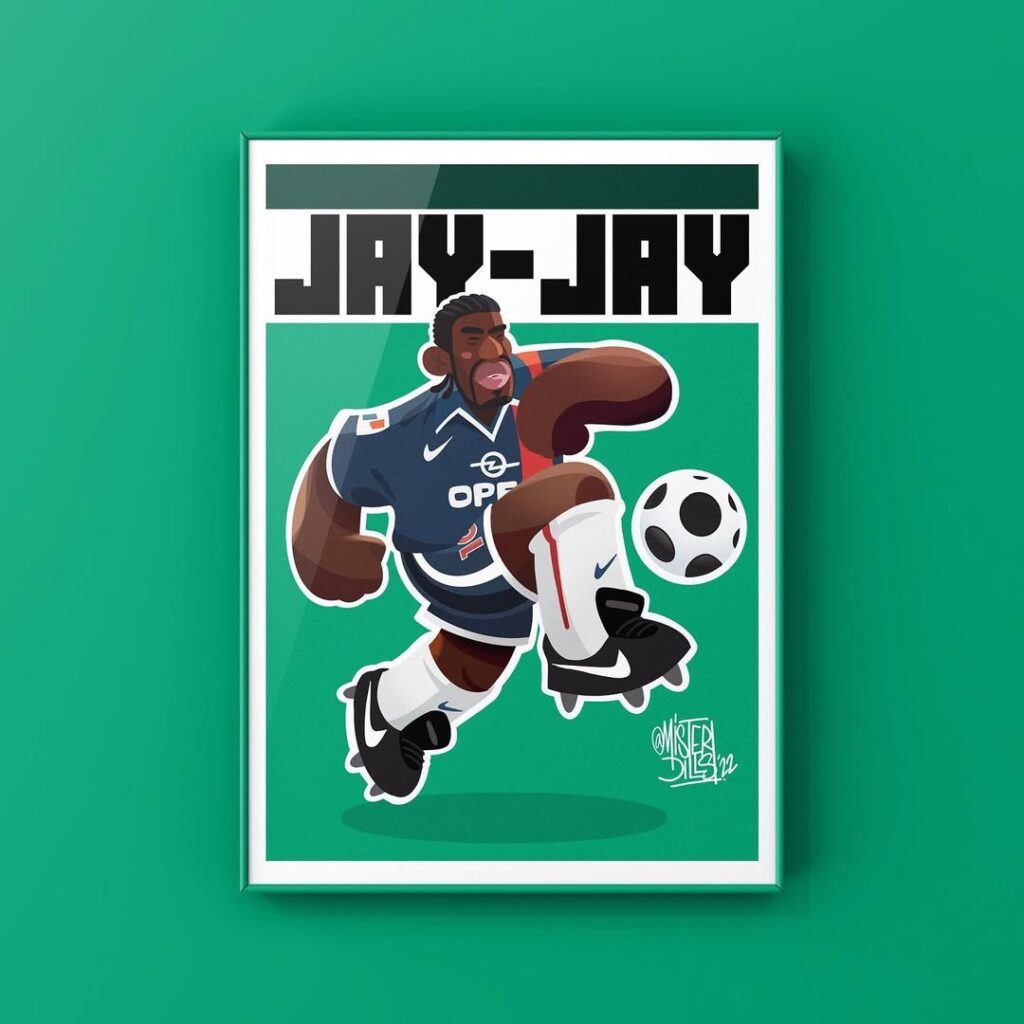
Zum Schluss: Worauf dürfen wir uns in nächster Zeit freuen?
Ich arbeite mit zwei Freunden an einem Projekt namens no ball games, das im neuen Jahr erscheint. Kenny besitzt eine unglaubliche Sammlung aus Trikots, Schuhen und Bällen. Roham ist ein brillanter Grafikdesigner.
Gemeinsam nehmen wir Stücke aus dieser Sammlung und schaffen Arbeiten, die ikonische Trikots und die Momente feiern, die in ihnen passiert sind. Es ist extrem aufregend – mit fantastischen Jerseys, großartigen Geschichten und Arbeiten, von denen wir hoffen, dass die Leute sie selbst besitzen wollen.
James, vielen Dank für den tollen Austausch mit dir. Das letzte Wort gehört dir.
Es war mir eine Freude. Ich fühle mich geehrt, dass ihr ein Interview mit mir führen wolltet, und freue mich sehr, dass meine Arbeit bei euch so gut ankommt.
Und mein Wunsch an alle: Geht zu einem Spiel weiter unten in der Fußballpyramide.
The Q&A in English
Some interviews feel less like a Q&A and more like a long conversation at the bar, somewhere between kick-off and last orders. This is one of them. We’re speaking with James, better known as Mister Dills — illustrator, football romantic, and someone who doesn’t just watch the game but feels it. Someone who lives in the North, carries the South with him, and whose view of football is shaped as much by aesthetics as by emotion.
It’s about Italia ’90 and White Hart Lane, about Pelé and Cruyff, about fan culture, doubt, lines on paper, and those fleeting seconds when an entire stadium holds its breath. Above all, it’s about the question of why football — despite everything — still holds its magic.
Make yourselves comfortable. The conversation begins where good stories usually do: with an introduction, as if you were just meeting for the first time.
Hello James, great to have you with us today. For all the readers who might be scrolling through our blog on the train, in the pub, or on their way to work: would you mind introducing yourself — the way you’d do it to a stranger at the bar?
Ah. Ok. Well I’m James and I’m an illustrator who lives in the North but comes from the south. I have a background in ux and design but lean more and more towards illustration these days with a firm obsession with the beautiful game!!
Can you still remember the exact moment football grabbed you? That split second when it pulled you in for good — no turning back?
It was a long time ago, I can tell you that much! I think it was Italia 90 when I was a child. I’d played football a little bit, but not much, but Italia 90 captured the nations imagination. I can remember playing World Cup doubles (a knockout football game) at school and spending more time arguing over who was going to be schillaci, gazza or Gullit than actually playing! The heartache of losing out to Germany in the semi final did it for me. We were all part of something bigger than ourselves and I think that is the beauty of playing for and supporting a team. Shared dreams and aspirations.
Football these days is a highly optimised beast — with VAR, absurd transfer fees and a Club World Cup hardly anyone asked for. What keeps the magic alive for you despite all that?
Moments. Football has changed an awful lot and there are many things I don’t really like about the path it’s on. However, there are still teams that play the most mesmerizing football (Bayern, psg, Barca) and there are still players able to produce moments of magic that make stadiums roar. Scotland and Ireland have recently posted results that just reaffirm for me that it’s the greatest sport in the world!
Which stadium was the first that genuinely felt like home to you? A place where the air tastes different and you instinctively sit up a little straighter?
White Hart Lane. The first ground I ever visited and one that I really miss. The March towards higher revenues meant that my team, Tottenham, felt it had to move on and the new stadium is magnificent. But it doesn’t have the magic of the Lane and I’m not sure it ever will.
If you had a time machine: which match in football history would you travel back to — and why that one?
Wow. Great question. Can I have two?? The two matches involve the same two teams. Brazil v italy in the World Cup final in 1970. And Brazil v Italy in Spain 82. Two remarkable games that featured incredible footballers on both sides. If I had to pick, I think it’d be 70 for the opportunity to see Pele in the flesh.
Is there a player who shaped your aesthetic eye? Not just in terms of technique, but in aura, style, body language?
I don’t know about shaping my aesthetic eye but I’ve always loved Johan Cruyff, even though he was way before my time. When you see the limited footage available, you see a player with invention and flair, a really graceful athlete. But what really stands out to me is his precision.
How much does your favourite club dictate your week, honestly? On a scale from “it’s just sport” to “please don’t ask me anything on Monday” — where would you put yourself?
Too much. Far too much. I’m really trying to grow up and not let 11 millionaires who don’t know I exist dictate my mood for an entire week but it’s a struggle. Any tips are welcome!!
How would you describe your style without using the classic phrases like “illustration”, “design” or “digital”? Let’s say you had to explain it to a child.
I think playful. I work in lots of different ways and don’t have a specific way of working but I do like to have fun when I’m creating work. I like to explore and experiment and pull from influences from all over.
Do you remember when you first realised: “Right, I can do this — I’m seeing things others aren’t seeing”? And was there a particular university or mentor who shaped you along the way?
I’m not sure I ever have! There’s always a bit of imposter syndrome, especially when working with big clients but I guess that’s the same for most people in any profession! I always try to do the best job I can and for that I have my dad to thank.
Is there a line, shape or composition where you look at it and think: “Yep, that’s me — that’s unmistakably Dills”?
No. Because it’s constantly evolving. Some months I’ll like keylines and flat colours, others I’ll want to experiment with texture and symbolism. I can only do what excites me and I’ve never been one for honing in on a particular style and making that my ‘signature’. I’m pretty sure it’s a more successful way of building a career in illustration but my brain just doesn’t work like that.
What’s the real secret — or the biggest challenge — when it comes to capturing the energy of a match in a static image?
Good question. I think it’s iterations. I have page upon page of sketches and scamps, rough pencil drawings drawn on copier paper or in sketchbooks that will likely never be seen. Working fast and not being precious about it is the only way I know. Sometimes it’ll take a minute, sometimes it will take a day, sometimes it will take even longer! But football is a game where speed is a huge component so I always find that matching that in the ideation phase is the best way to go.
Where do your best ideas hit you? In the stadium when the floodlights flick on? On the bus rolling through York? In the pub just before the second round is ordered?
Usually around 2am, frustratingly. I find early mornings I’m certainly more productive so when an idea has been established and I’m working on something that’s locked in, early to bed and early to rise is the way to work. In the ideation phase, it’s the other way around… working late, rising late. It’s weird as it’s been that way since I was very young. In terms of specific places, no I don’t have a special place where there’s a fountain of inspiration! I’d love to find one though, it’d lead to a more regular sleep pattern!
Which designers or illustrators would make it into your personal “visual starting XI”? Who has left a lasting mark on your way of working?
Impossible!! But I’ll give it a go. Charles Drawin, Dan Leydon, Mark Johnson, Danxdraws, Gabriel Diogo, tosma studio, Demi illustration, Stan chow, noscoredraws, bradyink, Camilo Ortiz Figueroa. 442 (diamond).
And on the days when nothing’s flowing: what pulls you out of a creative rut? A walk, a 90th-minute winner, an old matchday programme?
Hmm. I don’t really have one. I’m self critical like most artists/illustrators so every piece I’ve ever created, when I look back I can only focus on what I could have done better. But one day, there will be something that hits the mark. Got to believe that because that’s the essence of creating in my opinion. I’m probably never going to hit perfection but the next project, you never know… that might be the one. And that keeps the fire burning.
Is there a tiny, almost invisible detail in football that most people overlook — but you absolutely adore? Something you feel compelled to capture again and again?
I think tapping in to clubs other than the one you know inside and out is fascinating. As a football fan, I have an understanding of the broad strokes of the top clubs. But the real gold is much deeper and speaking to fans when doing research for a piece is one of my favorite things. The songs, the rituals, the memories and experiences. I’m working on a range of work currently that takes that to the next level, incorporating fandom and seeing me almost become a vessel for fans to channel their experience through with a view to creating pieces that symbolize their fandom. It’s exciting stuff.
Imagine you could create a complete visual universe for your favourite club: kits, posters, stadium graphics, merch — the whole lot from your hand. What would that world look like? Which colours, shapes and stories would live in it?
It would be a trip!! In a world where everything is slick and branded and, to a degree, homogenous I like to think I’d push so far in the other direction. I think I’d start from the homemade banners of the 60s and 70s and move everything off of that starting point. It always was a working class game, affordable for all and nearly everything had a home made feel to it, from jackets and pin badges to scarves and bobble hats, the flags that would tour the grounds up and down the country and the fanzines that would celebrate the club. Most of it is before my time but I would like to see clubs move more towards what truly made them special in the first place, not trying to look like everybody else. We’re all part of a tribe and everyone feels their tribe is better, and more unique, than everybody else’s. It’s a shame they’re all so similar these days.
And crucially: what new projects of yours can we look forward to in the coming months? What should our readers keep an eye out for?
I’m working with a couple of friends on a project called no ball games which will be released in the new year. Kenny has a collection of shirts, boots and balls that is remarkable and Roham is a brilliant graphic designer. Together we are taking pieces from the collection and creating work that celebrates those iconic kits and the moments that happened in them. It’s really exciting and we have some incredible jerseys and stories to showcase as well as work we hope people will love to have themselves.
James, thanks so much for this brilliant conversation. We’re massively excited for your upcoming work — and honestly, there’s already an idea brewing here at Sapeur OSB with your name on it.
The final word is yours. Say whatever you’d like to leave our readers with.
It’s been my pleasure. I’m humbled that you’d want to do an interview with me and I’m really glad that my work resonates with you guys enough to make this happen. I’d like to encourage everyone to go to a game lower down in the football pyramid.